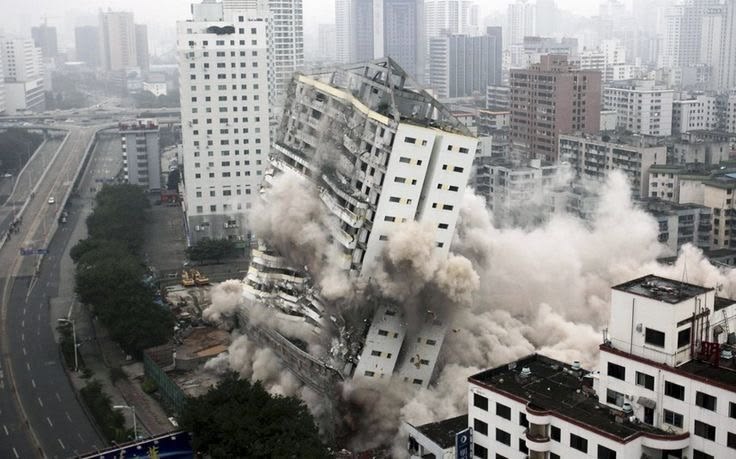
Of all the things that go wrong in construction, running out of money is among the most common, and the most avoidable. The dreaded "hidden surprise" that blows a construction budget in Kenya is rarely a genuine surprise. It is usually a cost that was never properly accounted for.
For diaspora investors, budgeting well matters even more. From abroad, you can't pop over to the site to cover a shortfall, and a budget that runs dry is one of the fastest ways to stall a project. The good news is that a solid, surprise-proof budget is entirely achievable, as long as you build it properly from the start. Here is how to budget so the only surprises are pleasant ones.
Why construction budgets "surprise" people
Before the how, it helps to understand the why. Budgets overrun for a handful of predictable reasons:
The budget was a guess, not a calculation: a rough figure from a conversation, not based on real quantities and prices.
Costs were left out: professional fees, approvals, utility connections and finishes that no one accounted for.
There was no contingency: nothing set aside for the genuinely unexpected.
Prices changed: materials and labour cost more as the project went on.
Scope crept: "small" additions and changes that quietly added up.
The fixed quote wasn't real: a tempting low price that grew once work began.
Almost every hidden cost falls into one of these categories. Deal with them up front, and your budget holds.
Step 1: Start with complete drawings
You can't price what you haven't defined. A reliable budget starts with complete architectural and structural drawings and clear specifications, which document the quality and standards of what is being built.
Vague plans lead to a vague budget. The clearer your design, the more accurate your numbers.
Step 2: Build your budget from a Bill of Quantities (BoQ)
This is the single most important step. A Bill of Quantities is a detailed, itemised breakdown of every material and element your project needs, with quantities, rates and costs, line by line. In effect, it is the complete work breakdown for your build.
A BoQ turns your budget from a guess into a calculation. It shows you:
What materials and work are required.
How much of each you need.
What each should cost.
It is also your benchmark throughout the build: the yardstick for tracking every shilling spent. That is why we always say the final cost should be tied to the BoQ, not to a fixed quote. A BoQ reflects what your project genuinely needs.
Step 3: Account for all the costs, not just construction
The classic hidden cost is an expense that never made it into the budget because no one thought to include it. Make sure your construction budget in Kenya covers every item below.
Budget item | What it includes | Why it gets missed |
|---|---|---|
Land | Purchase, transfer, legal and survey fees (if you don't already own it) | Treated as separate from "the build" |
Professional fees | Architect, structural engineer, quantity surveyor and project manager | Seen as optional extras |
Approvals and statutory costs | County Government approvals, NCA, NEMA and any specialised approvals | Left until the drawings are done |
Site preparation | Clearing, excavation, access and groundworks | Depends on ground conditions no one checked |
Main construction | Everything itemised in the BoQ | Rarely missed, but often underpriced |
Finishes | Tiles, fittings, paint, doors and fixtures | Often underestimated, and they add up quickly |
Services and connections | Water, electricity, drainage and sewerage | Assumed to be "included" |
External works | Boundary wall, gate, paving, landscaping and drainage | Forgotten until the house is finished |
Furniture and fittings | Fitting out for living or for letting | Planned after the money has run out |
Supervision | Professional oversight throughout the build | Cut to save money, then missed |
A budget that counts only "the building" is designed to surprise you. For the approvals in particular, see County, NCA, NEMA and specialised approvals explained.
Step 4: Always include a contingency
However carefully you plan, construction still has genuine unknowns: ground conditions, price movements and minor variations. A contingency is your financial shock absorber.
A sensible contingency is typically about 10% of the construction cost, and sometimes more for renovations, where surprises are more likely. It isn't spare money to spend. It is protection, there to absorb the unexpected without derailing the project.
If you don't need it, wonderful. If you do, it is the difference between a minor adjustment and a stalled site.
Step 5: Plan for rising prices
Construction rarely happens overnight. A typical maisonette can take 8 to 12 months (see how long it takes to build a maisonette in Kenya). Over that time, material and labour prices move. A budget based entirely on today's prices can fall short by the time you reach the finishes.
Include a realistic allowance for price changes, especially on longer projects and for imported materials that are exposed to exchange-rate swings. Honest budgeting expects this rather than assuming prices will stay the same.
Step 6: Control scope and variations
Scope creep is a silent budget killer: a better finish here, a bigger window there, each one small, all of them adding up.
Finalise your design before you build. Changes are far cheaper on paper than in concrete.
Agree a variation procedure. Any change to scope or cost is priced and approved before the work is done, not discovered on the final invoice.
Track every variation against your budget and contingency.
Control the changes, and you control the cost.
Step 7: Be wary of fixed quotes that seem too good
A single, suspiciously low fixed price is one of the most common traps. It wins the job, then grows through "extras" and variations once you are committed, or the quality quietly drops to match the price.
A budget based on a transparent BoQ is more honest than a tempting fixed quote. You pay for what your project genuinely needs, you see where every shilling goes, and there is nowhere for hidden costs to hide. Quality should never be the thing quietly adjusted to make a cheap price work.
Step 8: Track spending against the budget throughout
A budget isn't a one-off document. It is a working tool. Throughout the build, track actual spending against the BoQ, milestone by milestone. That way:
Overruns show up early, while they are small and fixable.
You always know how much is left and where it is going.
Payments are tied to verified progress, never made ahead of it.
For diaspora investors, regular spend-against-budget reports are how you keep financial control from thousands of miles away. Our guide to managing construction in Kenya from abroad covers the reporting to ask for.
Questions people ask
How much contingency should I add to a construction budget in Kenya?
About 10% of the construction cost is a sensible starting point for a new build. Renovations usually need more, because hidden problems are more likely once you open up an existing building.
What is a Bill of Quantities, and who prepares it?
A Bill of Quantities lists every material and item of work in your project with its quantity, rate and cost. It is normally prepared by a quantity surveyor from the complete architectural and structural drawings.
Is a fixed quote better than a BoQ?
Not necessarily. A fixed quote can look safer, but a low one often grows through extras or is met by cutting quality. A detailed BoQ shows exactly what you are paying for and gives you a benchmark to check every payment against.
Which costs do people most often forget?
Professional fees, approvals, utility connections, external works such as the boundary wall and gate, and finishes. Together these can add a large amount to a budget that only counted the building itself.
The Kaka Systems approach: honest numbers, no nasty surprises
We budget the way we would want our own money budgeted. We start with complete drawings and a detailed BoQ, account for every cost (not just the building) and build in a reasonable contingency. We tie the final cost to your project's genuine requirements rather than a tempting fixed quote, and we track spending against the budget at every milestone, reporting to you openly.
Through our escrow-backed model, funds are released only as verified milestones are reached, so your money moves in step with real progress. You can read more about it in how escrow protects your money when building from abroad. And we never cut corners on quality to make the numbers fit.
Build on numbers you can trust
A surprise-free budget isn't luck. It comes from complete drawings, a detailed BoQ, every cost accounted for, a proper contingency and honest tracking throughout. Get the budget right, and you protect everything that follows: your timeline, your quality and your peace of mind.
Planning to build? Talk to Kaka Systems. We will help you put together a complete, honest construction budget from the ground up, so you can invest with confidence and avoid nasty surprises, wherever you are in the world. Book a free consultation.

Written by
Kaka Systems
Kaka Systems builds homes across Kenya, with clear budgets in KES and full updates for clients abroad.